
TLDR: Take some mushrooms, add buzzwords like "adaptogen," sprinkle in a few millions of VC money, and suddenly you're selling canned calm for $42 a pack.
But between the impossible nutrition math (18g carbs = 25 calories?), founders with questionable credentials (hello, fake monk), and exactly zero companies testing if their specific blends actually work, there’s a $1.5 billion industry.
Here's what I found after looking into Amazon's top-selling adaptogen drinks, and why HOP WTR might be your least questionable option — though men might want to think twice about those hops. Spoiler: most of these companies have more marketing specialists than scientists, and it shows.
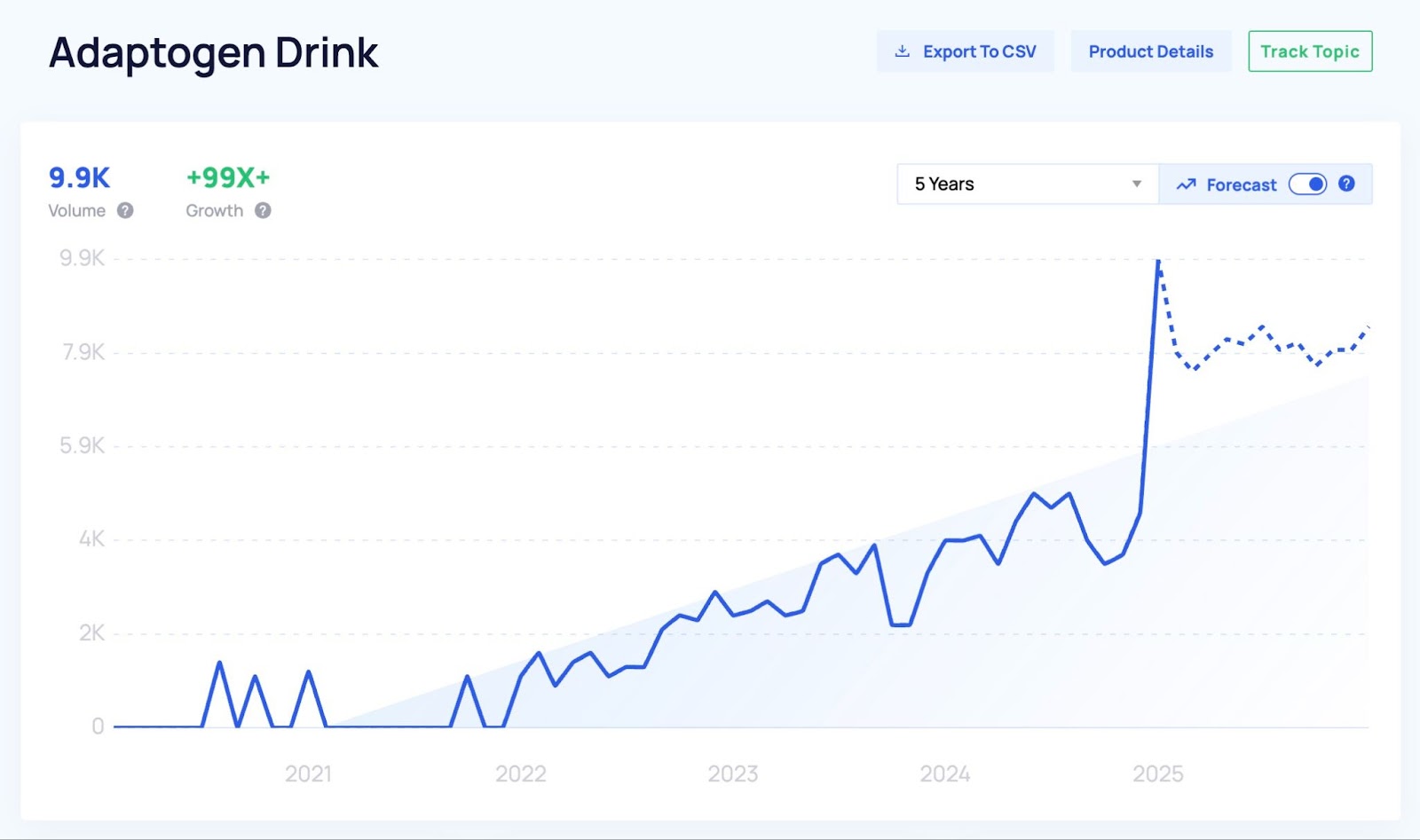
Disclaimer: I discovered this trend using Exploding topics (I am an affiliate and a long-time fan of this tool), which has become my go-to resource for uncovering under-the-radar opportunities. While the tool doesn’t provide the research that comes with my newsletter, if you're into finding even more trends in all the fields, this tool is definitely worth a look.
Table of Contents
A quick Amazon search pulls up 556 products matching the term “adaptogen drink” and some of them making pretty wild claims promising to be your ticket to stress-free living.
These drinks — infused with ingredients like ashwagandha and l-theanine (but mostly made of juice, water and some type of sweetener) — have gone from obscure wellness supplements to mainstream merchandise. The market of adaptogen drinks hit $1.56 billion in 2023 and shows no signs of slowing down. Industry projections suggest we'll see sales shoot up to $2.42 billion by 2034.
But after spending hours looking into these drinks I found that as usual questions about ingredient quality, dosage effectiveness, and manufacturing standards often go unanswered.
So what's actually in these cans of calm? Does the mix actually work or manufactures just extrapolated some irrelevant research headlines on their product’s packaging? Why are some priced like luxury items while others cost less than a regular energy drink? And most importantly — are they giving you the stress relief you're paying for? Let’s dive in together.
Recess: When calm comes with questions
Sitting pretty at the top of Amazon's adaptogen drink rankings with over 10,000 purchases in the past month, Recess Mood sells its magnesium and adaptogen beverages for $41.84 per 12-pack ($0.29 per fluid ounce). Their marketing is polished — a rainbow of flavors from Strawberry Rose to Grapefruit Tangerine, complete with promises of relaxation and "mental calmness."
This company, which started as a CBD beverage brand, has quietly shifted away from CBD entirely in their new adaptogen line. Nothing wrong with pivoting your business, but it's the kind of detail that makes you wonder if they are changing as fast as trends, how much of the research they do to make sure that the product is actually good?
The nutritional facts raised some eyebrows too. Their Raspberry Lemon and Strawberry Rose flavors show different carbohydrate content (6g vs 4g) but somehow maintain identical calorie counts (20 calories). That's not how nutrition math works.
The ingredient list looks solid at the first glance. You've got your magnesium L-threonate, L-theanine, and lemon balm — all wrapped up in a low-calorie, low-sugar package. And there's some actual science backing these ingredients. Studies show L-theanine can reduce stress responses and heart rates, while lemon balm has proven benefits for anxiety. But do these studies have anything to do with Recess drinks? Crickets.
Looking through their 112 LinkedIn employees, I found plenty of marketing pros, brand strategists, and sales experts. What I didn't find? Scientists, nutritionists, or anyone focused on ingredient safety. Even their CEO, Benjamin Witte, comes straight from product marketing and venture capital — no background in nutrition or supplements.
The real head-scratcher comes from their star ingredient, Magtein®. You'll see this trademark plastered on their packaging and website footer, attributed to Magceutics®, Inc.
Magtein website says: “Backed by the rigors of prestigious scientific investigations from Nobel Laurates and world renowned neuroscientists, Magtein is the favored ingredient for cognitive well-being.” So I did some digging. Magceutics® has zero employees on LinkedIn. I couldn’t wrap my head around it — where are all nobel “laurates”?
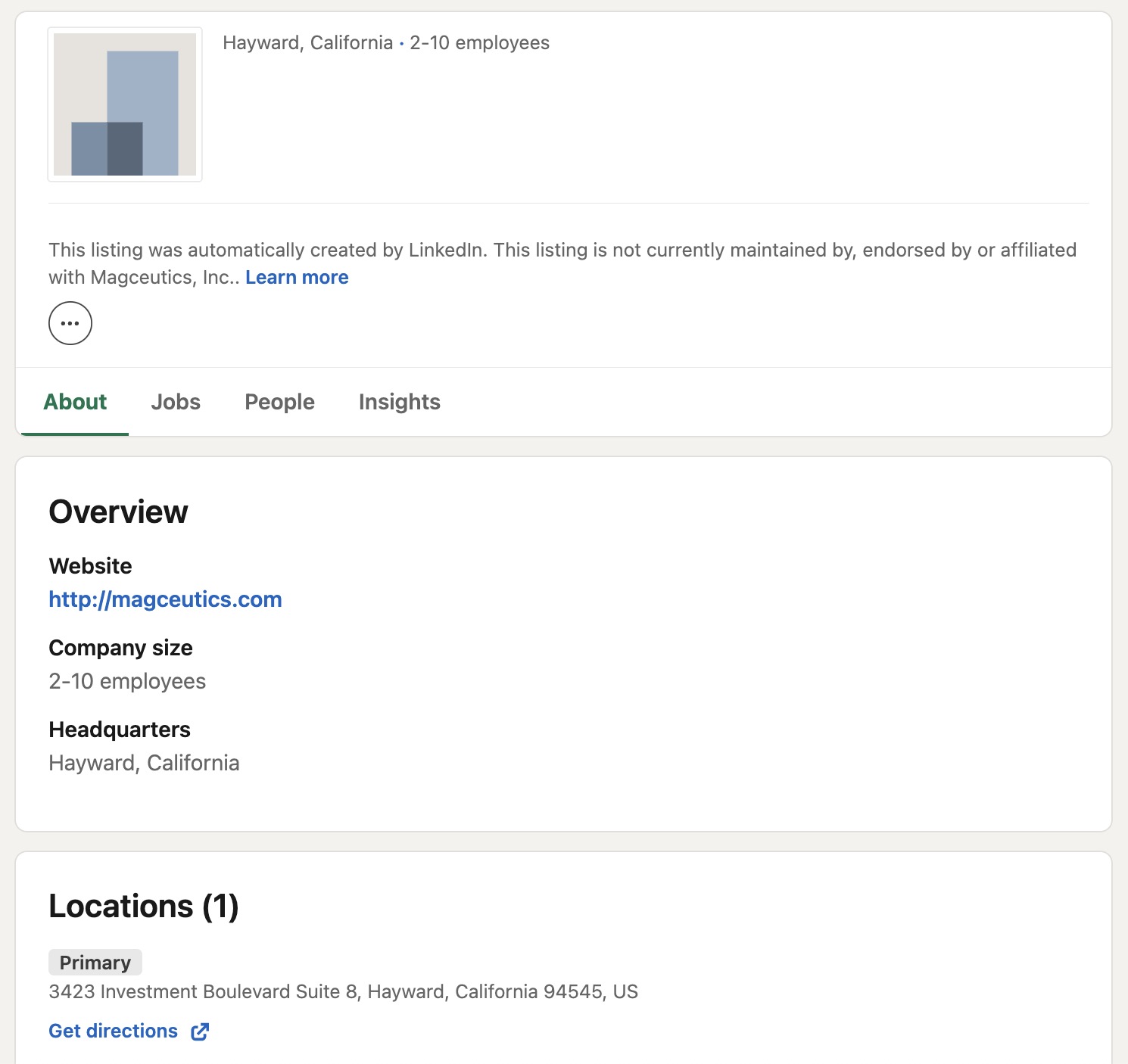
I had to search harder, because it didn’t make much sense. And it turned out that Magceutics®, Inc. is operated by Neurocentria Inc., a biotech firm developing drugs for Alzheimer's and ADHD.
Sure, Neurocentria has some solid scientists (though not the Nobel laureates their marketing claims). But something seems very off about a biotech company running FDA-approved brain drug trials while simultaneously developing ingredients for wellness drinks that don't require FDA approval — all while obscuring the connection between the two.
Hiyo: When the math doesn't add up
At $38.24 for a 12-pack ($0.265 per ounce), Hiyo's Organic Social Tonic holds the second spot in Amazon's adaptogen drink rankings with over 5,000 monthly purchases. Their story sounds compelling — two friends creating an alcohol alternative after family health scares. It's the kind of origin story that sells well in pitch meetings (they just raised $20 million in Series A funding). But something about their product didn't sit right with me.
Let's start with simple math. Their Blackberry Lemon flavor lists 11g of carbohydrates and 30 calories on the nutrition label. Anyone who's taken basic nutrition knows that one gram of carbohydrates contains four calories — this drink should have at least 44 calories. This kind of basic error makes you wonder what else might be off.
The ingredient list reads like a wellness trend checklist: organic KSM-66 ashwagandha, lion's mane mushroom extract, L-theanine from green tea. They've even doubled up on sweeteners, using both organic erythritol and organic cane sugar. Their website makes bold claims about each ingredient — passion flower "encourages relaxation," lemon balm "stabilizes mood," lion's mane "promotes clarity." Pretty statements, but where's the proof that their specific blend does anything? You guessed it — there’s none.
A LinkedIn deep dive revealed 21 employees, and the pattern looks familiar. There's no shortage of marketers, branding specialists, and "growth hackers." But what you won't find? Food scientists, nutritionists, or anyone who actually understands how these ingredients interact.
The founders' backgrounds tell a similar story. George Youmans comes from branding and marketing, primarily pushing Red Bull (not exactly a health, rather death drink). His co-founder, Evan Quinn is a former financial analyst with zero experience in nutrition or supplement formulation. They're great at raising money and creating “sellable” brand — but developing evidence-based functional beverages? That's a different story.
If you're looking for an alcohol alternative to sip at social gatherings (core drinks’ marketing message), Hiyo might do the job. But if you're seeking proven cognitive benefits or stress relief? I'd want to see some actual testing on their specific formula first. After all, throwing trending ingredients together is one thing — proving they work in combination is another entirely.
Odyssey Elixir: Big claims, basic math problems
Odyssey Elixir, ranking third in Amazon's adaptogen drinks with 3,000+ monthly purchases ($35.95 for 12 cans, $0.25/Fl Oz at the moment of writing), isn't shy about its promises. "COGNITION + ENERGY" splashed across their cans in bold lettering. Let’s have a closer look at the nutrition label for their Blackberry Lemonade flavor. They claim 18 grams of carbohydrates but only 25 calories. If you're keeping score at home, that's mathematically impossible — 18 grams of carbs equals 72 calories, period. When a company can't get basic nutrition math right, it makes you question everything else they're claiming.
Speaking of claims — their packaging reads like a nootropics wishlist:
"Lion's Mane Extract (1500MG | 8:1 ratio) Enhances Cognition"
"Cordyceps Extract (1250MG | 8:1 ratio) Supports Athletic Endurance"
"Green Tea Caffeine (85MG) Amplifies alertness and focus"
These are bold statements about brain function printed right on the can. I spent some time searching for evidence that any regulatory body approved these claims. Spoiler alert: I found nothing.
A LinkedIn search revealed nine employees at Odyssey Elixir. The usual suspects are there — C-level executives, vice presidents of sales, marketing specialists. What's missing? Anyone with expertise in food safety or nootropics research. Not a single scientist in sight.
The CEO's background is particularly telling. Scott Frohman's previous ventures? CBD and vaping companies. He's built his career in recreational substances, and now he's suddenly an expert in cognitive enhancement? While they've managed to raise $14 million in funding, it seems most of that money is going toward marketing rather than proving their product actually works.
Their website looks great — slick design, beautiful photography, compelling copy. But when it comes to actual evidence that their specific blend of ingredients affects human cognition? Radio silence.
If you're looking for proven cognitive benefits, I'd skip this one. Pretty packaging and venture capital millions don't make up for questionable math, lack of relevant expertise on the team and unsubstantiated brain health claims.
HOP WTR: A better brew with a catch
At $29.16 for a 12-pack ($0.20 per ounce at the moment of writing, most affordable on the list), HOP WTR positions itself as your weekday beer alternative. Started by two dads seeking hangover-free unwinding, it's landed in Amazon's top adaptogen drinks with over 3,000 monthly purchases. And unlike our previous contenders, this company actually has some substance behind their product.
The leadership impressed me for once (I am simply happy when it happens, because, let’s face it, it’s been a very rare occasion on this newsletter). CEO Jordan Bass, who recently dropped his salary to $1 to help LA residents affected by the Palisades fires. But not only is he a very sweet human being, he also brings solid experience in the healthy beverages space. Company founder Nick Taranto's background in food safety and quality control through his current venture in microbial testing shows real concern for product integrity. Not to mention he was a cofounder of Plate, one of the first meal kits companies (started in 2012). Since then the business was sold to Albertson in 2017 and does’nt seem to operate at the same capacity, but at least the thought and concern about better eating was there.
With 44 LinkedIn employees, they've built a team that actually understands the beverage industry. Their formula is simple: carbonated water, vitamin C, hops, L-theanine, and ashwagandha. No calories, no carbs, no sugar.
The benefits of hops are backed by science — studies show they can reduce anxiety and improve sleep quality. There's even research suggesting hops have antioxidant and anti-inflammatory properties.
But here's where it gets complicated. First, there's that sneaky "natural flavors" on the ingredient list. This isn't just semantic nitpicking — it's a serious regulatory loophole. Companies can declare ingredients as "natural flavors" through what's called the "secret GRAS" pathway, meaning the FDA has zero information about roughly 1,000 substances in our food supply. A "natural flavor" can include chemical transformations using inorganic catalysts, and still technically be "natural." One example is the LaCroix lawsuit about linalool, “used in cockroach insecticide,” in their "100% natural" water? Same issue.
Then there's the hops themselves. While beneficial for some, the research shows interesting gender differences. Most positive studies focus on women — helping with menopausal symptoms and sexual health. For men? Regular consumption might not be ideal due to hops' phytoestrogenic properties.
Of all the adaptogen drinks we've looked at, HOP WTR seems the most legitimate. They've got experienced leadership and transparent operations. But I'd love to see them ditch the vague "natural flavors" and maybe add a note about moderate consumption, especially for male consumers. Also since they strategically placed “adaptogens and nootropics” I’d like to see the test results of how those ingredients perform in their drinks in particular.
Juni: When influencer tea leaves a bitter taste
Coming in at $29.95 for a 12-pack ($0.21 per ounce), Juni markets itself as sparkling adaptogenic tea that promises to "ignite the spark within." Created by Jay Shetty — a self-help personality and podcast host — and his wife Radhi Devlukia-Shetty, this drink claims to enhance focus and elevate wellness. But there's more brewing here than just tea.
Their ingredients include organic green tea, lion's mane extract, and reishi mushrooms. The nutrition looks reasonable — 5 calories and 1g of carbohydrates per can. But that's about where the transparency ends.
The real story here is about credibility. Jay Shetty, Juni's co-founder, has recently faced serious allegations about his authenticity. Reports reveal he fabricated significant parts of his life story, particularly his claims about being a monk in India. What was marketed as three years in an ashram in Mumbai turned out to be mostly time spent in Watford, England.
It gets worse. Shetty has faced multiple plagiarism accusations since 2019, with allegations of copying content without attribution. Even his academic credentials have come under scrutiny — his claimed behavioral science degree appears to be from an institution that doesn't offer such a program.
A LinkedIn search shows Juni has nine employees — two co-founders, two investors, one advisor, three marketers, and one sales person. Notice what's missing (yet again)? Scientists, quality control specialists, or anyone with expertise in supplement formulation or testing. For a company selling drinks with powerful bioactive compounds, this seems like a significant oversight.
When someone builds their brand on questionable claims about spiritual enlightenment, then launches a wellness drink company, you have to wonder: is this about health, or is it just another revenue stream? Between the founder's credibility issues and the lack of technical expertise on their team, I'm staying away from this one.
The science behind the sip: What's actually proven?
Looking at these drinks' claims about cognitive enhancement, stress relief, and mood improvement, you'd think their formulas had been thoroughly tested in clinical trials. But none of them have actually studied and tested their specific blends. (And if they did, they didn’t bother to share the results of it).
Let's take L-theanine, a star ingredient in most of these drinks. The research is more nuanced than the marketing suggests. While studies show L-theanine combined with caffeine can enhance attention and memory, drinks like Recess skip the caffeine entirely, potentially missing this synergistic effect. Even more concerning, research on L-theanine alone for anxiety showed no significant benefit over placebo. Yet you wouldn't know this from their marketing.
These companies are playing a clever game. They cherry-pick positive studies about individual ingredients, then make sweeping claims about their proprietary blends. Odyssey Elixir boldly prints "Enhances Cognition" right on their cans, citing their lion's mane extract. Juni promises "calmness of mind" from their mushroom blend. HOP WTR suggests stress relief from their hop-adaptogen combination. But none of them have actually tested formulations for respective claims.
What's particularly concerning is the dosage question. Even when ingredients show promise in studies, the amounts used in research often differ from what's in these drinks. Research showing L-theanine's stress-reduction effects used specific dosages under controlled conditions. But when you're sipping these drinks, are you getting enough of any ingredient to matter? Or too much if you drink several cans?
Most of these companies have plenty of marketing staff but zero scientists. They're skilled at packaging research about individual ingredients into compelling stories, but they're not actually advancing our understanding of how these compounds work together in their specific products.
Here's my take: while some of these ingredients show promise individually, buying these drinks for their claimed benefits is like playing nutritional russian roulette. You're paying premium prices for untested combinations, hoping the marketing matches reality.
After dissecting marketing claims, analyzing ingredients, and checking countless nutrition labels, here's what you need to know before spending money on these trendy drinks:
Check the basics first. When a company can't even get their nutrition math right (looking at you, Odyssey and Hiyo), it's a red flag. If they're sloppy with basic calorie calculations, can you trust them with complex bioactive compounds?
Look past wellness storytelling. Whether it's Jay Shetty's questionable monk credentials or Recess's mysterious Magtein® connection, fancy founder stories often mask concerning business practices. Instead, look for companies with actual expertise in beverage development and safety testing.
Watch the ingredient interactions. These drinks often combine multiple active compounds without studying how they work together. L-theanine might work well with caffeine for focus, but that doesn't mean it'll play nice with every mushroom extract or adaptogen in the mix. Those ingredients also have side-effects and contraindications by the way.
Question the dosage. Even when ingredients have solid research behind them, these drinks rarely specify if they're using the studied effective doses. Are you getting enough of any ingredient to matter? Or possibly too much when consuming multiple cans?
Be skeptical of "natural flavors." That innocent-sounding term can hide a multitude of questionable ingredients through the "secret GRAS" loophole.
Consider your specific needs. If you're looking for an alcohol alternative, something like HOP WTR might make sense (though men should note the estrogenic effects of hops). But if you're seeking specific health benefits, you might be better off with supplements that have clear dosing and proven efficacy.
Here's the bottom line: while some of these drinks' ingredients show promise individually, most companies are selling untested combinations with unproven benefits at premium prices. If you enjoy them and have the budget, go ahead. But don't expect these trendy cans to deliver on all their wellness promises. Your money might be better spent on evidence-based supplements or, hey, maybe just a good night's sleep.


